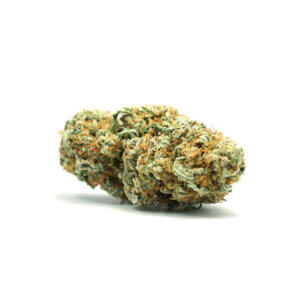
To cure weed, seal properly dried buds loosely in an airtight, opaque container, keep it in the dark, and open it briefly every day at first. The cure is done when a hygrometer in the jar stops climbing, not when the calendar says so. That reading is more meaningful than most guides let on: at equilibrium it is the same quantity, water activity, that the published standard for dry cannabis flower is written in.[3][4] Here is the method, what the jar is actually doing, and what the research does and does not say about it.
Key Takeaways
- Aim for 55% to 65% in the jar. The standard for dry cannabis flower is a water activity of 0.55 to 0.65, and water activity is simply equilibrium relative humidity divided by 100.[3][4]
- Moisture rises during a cure. In a three-week curing study, moisture content went up by 3.3 to 13.6 percentage points, depending on how the material was dried.[1]
- Curing does not add THC. Total cannabinoid content did not change significantly over the three weeks.[1]
- Mould is decided when you seal the jar. Most fungi cannot grow below a water activity of 0.7, but two common genera survive between 0.62 and 0.7.[5]
- No study has found the best cure length. Published work has used anywhere from one day to three weeks, none of it chosen as an optimum.[1][2][8]
On this page
How to cure weed, step by step
- Dry first. Curing starts with flower that is already in the 0.55 to 0.65 water activity range, roughly 55% to 65% in a sealed jar.[3] Flower sealed too wet is where mould risk comes from (see mould risk).
- Fill loosely. Use an airtight, opaque container and leave the buds loose rather than packed, so moisture inside the buds can move out into the air.
- Keep it dark and at room temperature, with a small hygrometer inside the container.
- Read, then act. Leave the jar closed for several hours before trusting the reading.[4] Open it briefly to let humid air out if the reading is rising.
- Stop when it settles. When the reading comes back the same day after day, the moisture has evened out and the cure is done.
Notice there is no week count in that list. The research does not support one, and we come back to why below.
What the hygrometer is telling you
Water activity is defined as equilibrium relative humidity divided by 100.[4] So a hygrometer that has sat long enough in a sealed jar of flower is reporting the same thing a testing lab reports, just as a percentage instead of a decimal. A reading of 62% is a water activity of 0.62, inside the 0.55 to 0.65 range the cannabis standard specifies.[3]
Two conditions come with that reading. The air in a closed container needs several hours to reach equilibrium, so a number taken minutes after closing the lid is not a measurement. And temperature matters: a 0.1 °C difference between the sample and the air above it shifts the result by about 0.005.[4] Read a jar that has been closed for a while, at a steady room temperature.
| Settled jar reading | What it means | What to do |
|---|---|---|
| Above 70% | Too wet; most fungi can grow above a water activity of 0.7[5] | Take it out and dry it further |
| 66% to 70% | Penicillium and Aspergillus survive between 0.62 and 0.7[5] | Open the jar more often until the reading drops |
| 55% to 65%, still rising | Moisture is still moving out of the buds | Keep opening it daily |
| 55% to 65%, steady | The moisture has evened out | Open it less often; the cure is done |
| Below 55% | Drier than the standard range[3] | Stop opening it |
The middle of the range is the safer target: the top of the standard window overlaps the range where those two fungal genera can survive.[3][5]
What happens inside the jar
The best data on curing comes from a 2025 study of two hemp cultivars, dried three different ways and then cured for three weeks in sealed glass jars or Mylar bags, in the dark at room temperature.[1]
| Measured | After three weeks of curing[1] |
|---|---|
| Moisture content | Up by 3.3 to 13.6 percentage points, depending on the drying method |
| Humidity in the container | Rose over the three weeks |
| Total cannabinoids | No significant change |
| Acid to neutral cannabinoid ratio | Fell; further decarboxylation, generally under 2% |
| Green colour | Reduced |
| Yeast and mould | Fell in most samples, though not significantly; curing did not raise the risk |
Two cautions on those numbers. The material was CBD-type hemp, and one drying method took it well below the moisture of smokable flower, so treat the direction as useful and the exact figures as belonging to that study. And the 3.3 to 13.6 figure is a range of increases, not a starting and finishing moisture.[1]
Why does moisture go up in a sealed jar? Because a dried bud is not evenly dry. Stems and the centre of a dense bud hold more water than the surface, and sealing the container lets it spread out until everything sits at one level. Opening the jar lets that humid air go.
How often to burp
A common starting rhythm is once a day for the first week, every few days in the second, then weekly. Treat that as a starting point only: no study has tested how often to open a curing jar against any measured result. The hygrometer is the better guide. Keep opening the jar while the reading climbs back after each close, and open it less once it holds steady.
How long to cure
There is no evidence-based answer. No published study has compared cure lengths against quality, and the durations used in research were chosen for other reasons:
| Study | Cure used |
|---|---|
| Baek and colleagues, 2025[1] | Three weeks, sealed jars or Mylar bags, dark, room temperature |
| Oswald and colleagues, 2021[2] | Hung to cure and dry for 11 days |
| Birenboim and colleagues, 2024[8] | One day with desiccant, after controlled drying |
Cure to a steady reading instead.
Curing and smell
The end of the cure is when flower smells strongest. In the 2021 study, the sulfur compounds behind the skunk note reached their maximum at the end of an 11-day cure, and a measurement ten days after the flower was jarred showed a substantial decrease in all of them.[2] Terpenes fade too: a six-month storage study found the original aroma profile was not kept under any storage condition tested, with monoterpenes, the most volatile, degrading most easily.[6] More on that in why weed smells and why it fades.
On chlorophyll: the hemp study measured a loss of green colour through drying and curing and suggested it could be due to chlorophyll breaking down.[1] It did not measure smoke or harshness, so the popular claim that curing makes smoke smoother by removing chlorophyll remains untested.
Mould risk
A 2023 review puts it plainly: when drying brings cannabis below a water activity of 0.7, most fungi cannot grow, but Penicillium and Aspergillus can survive between 0.62 and 0.7, a range the review calls suboptimal for them rather than safe. Most fungi grow best between 0.83 and 0.99.[5]
Curing itself did not add risk in the hemp study: yeast and mould fell in most cured samples, and the authors concluded curing did not enhance microbial risk.[1] A survey of over 2,000 commercial cannabis samples likewise found yeast and mould levels driven by genotype, environment and handling before and after harvest.[7] The moment that matters is the moisture when the lid goes on.
Glass jar or Mylar bag
For the cure, it made no measurable difference. Over three weeks, glass jars and Mylar bags showed no significant difference in moisture, and Mylar's slightly higher yeast and mould counts were not significant either.[1]
For storage after the cure, a six-month study found a glass bottle kept the original aroma profile better than an airtight plastic box or open air, but also saw more decarboxylation in glass, and concluded no storage condition yet preserves both aroma and acid cannabinoids.[6] For keeping cured flower, see how long weed lasts and how to store it and humidity control for bulk storage.
Common curing mistakes
| Mistake | Why it matters | Fix |
|---|---|---|
| Sealing it too wet | Two common fungi survive at 0.62 to 0.7[5] | Dry into the 0.55 to 0.65 range first[3] |
| Reading the jar right away | The air needs hours to reach equilibrium[4] | Read a jar that has been closed for a while |
| Reading it cold | 0.1 °C shifts the result by about 0.005[4] | Let the jar sit at room temperature first |
| Packing the jar tight | Moisture stays trapped inside the buds | Fill loosely |
| Curing for potency | Total cannabinoids did not change during curing[1] | Cure for moisture and aroma |
Curing at home in Canada
Curing is part of harvesting what you grow, so the home-growing rules apply. The Cannabis Act makes it an offence to cultivate, propagate or harvest more than four cannabis plants at any one time in a dwelling-house, counts that limit per home rather than per adult, and includes the yard or garden.[9] Provinces and territories can set their own rules on home growing, so check yours.
Not growing? Compare dried, cured flower from Canadian online dispensaries on flower for sale, or browse hash.
FAQ
How do you cure weed?
What humidity should a curing jar be?
How long should you cure weed?
Does curing make weed stronger?
Why does the humidity in my curing jar keep going up?
Can you cure weed in a Mylar bag?
Can weed go mouldy while curing?
References
- Baek, Y., Grab, H., and Chen, C. (2025). Postharvest Drying and Curing Affect Cannabinoid Contents and Microbial Levels in Industrial Hemp (Cannabis sativa L.). Plants, 14(3), 414. doi.org/10.3390/plants14030414
- Oswald, I. W. H., et al. (2021). Identification of a New Family of Prenylated Volatile Sulfur Compounds in Cannabis Revealed by Comprehensive Two-Dimensional Gas Chromatography. ACS Omega, 6(47), 31667-31676. doi.org/10.1021/acsomega.1c04196
- ASTM International. ASTM D8197: Standard Specification for Maintaining Acceptable Water Activity (aw) Range (0.55 to 0.65) for Dry Cannabis Flower Intended for Human/Animal Use. store.astm.org
- U.S. Food and Drug Administration (1984). Water Activity (aw) in Foods, Inspection Technical Guide. fda.gov
- Gwinn, K. D., Leung, M. C. K., Stephens, A. B., and Punja, Z. K. (2023). Fungal and mycotoxin contaminants in cannabis and hemp flowers: implications for consumer health and directions for further research. Frontiers in Microbiology, 14, 1278189. doi.org/10.3389/fmicb.2023.1278189
- Spadafora, N. D., et al. (2024). The influence of drying and storage conditions on the volatilome and cannabinoid content of Cannabis sativa L. inflorescences. Analytical and Bioanalytical Chemistry, 416. doi.org/10.1007/s00216-024-05321-w
- Punja, Z. K., Ni, L., Lung, S., and Buirs, L. (2023). Total yeast and mold levels in high THC-containing cannabis (Cannabis sativa L.) inflorescences are influenced by genotype, environment, and pre- and post-harvest handling practices. Frontiers in Microbiology, 14, 1192035. doi.org/10.3389/fmicb.2023.1192035
- Birenboim, M., et al. (2024). In Pursuit of Optimal Quality: Cultivar-Specific Drying Approaches for Medicinal Cannabis. Plants, 13(7), 1049. doi.org/10.3390/plants13071049
- Cannabis Act (S.C. 2018, c. 16), section 12. laws-lois.justice.gc.ca
For adults 19+. General information, not medical advice. Home cultivation rules differ by province and territory; check the rules where you live. Keep cannabis locked away from children and pets.