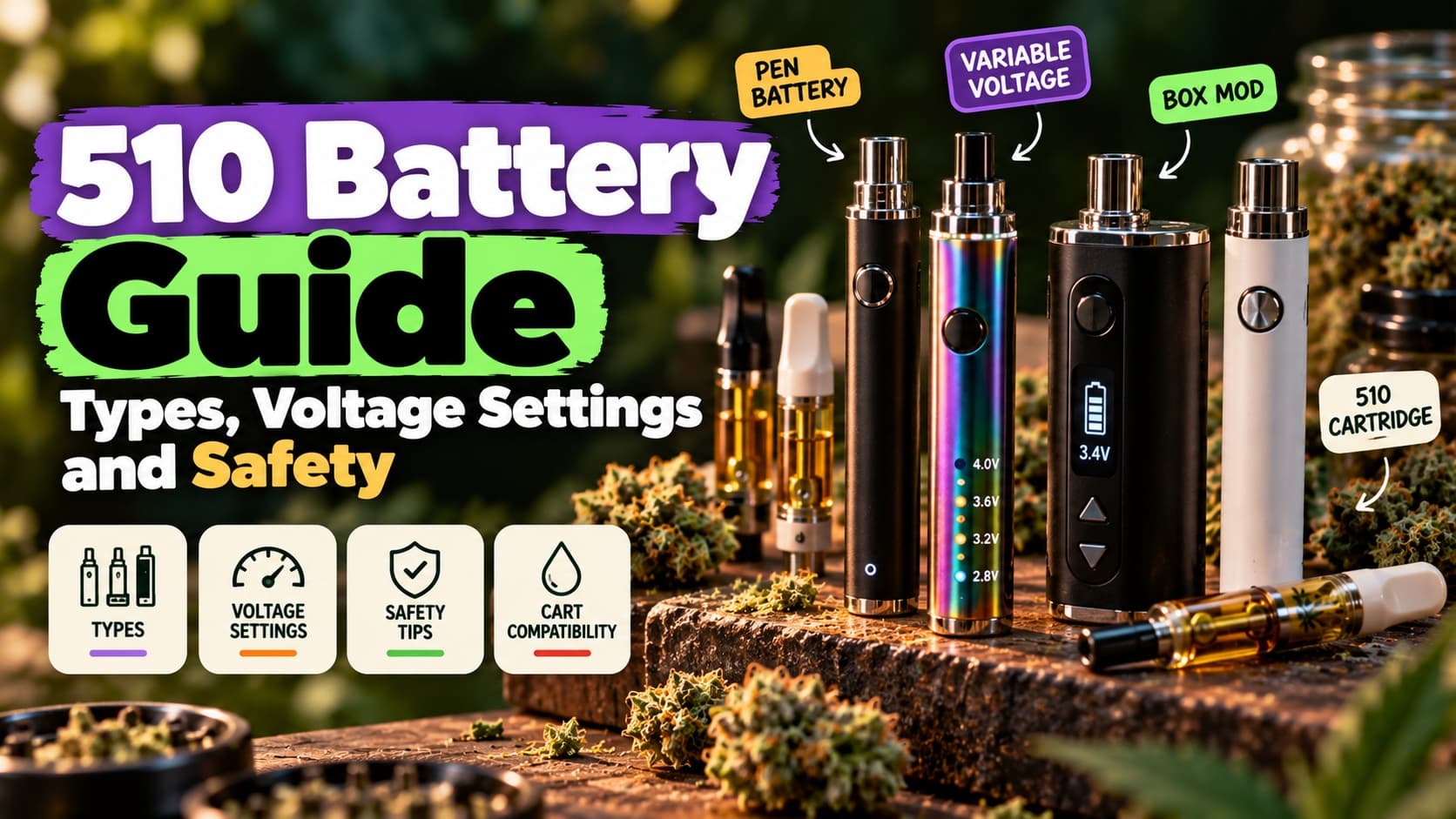
A 510 battery is the small rechargeable battery that screws onto a 510-thread vape cartridge and heats it. The name comes from the threading: a 5mm length and 10 threads, the grooves that join the battery to the cart.[1] 510-thread carts are among the most popular precisely because they are compatible with the widely available 510-thread battery.[1] Below: the types of 510 battery, what the voltage settings are for, how to keep the battery safe, and what Canadian rules say about the carts.
Key Takeaways
- 510 is a thread, not a brand. It refers to the battery's 5mm length and 10 threads.[1]
- There are two ways to fire one: draw-activated (just inhale) and button-activated, which often adds voltage settings.[3][4][5]
- Voltage settings on 510 batteries sold in Canada run roughly 2.4V to 3.9V.[3][4]
- Lithium-ion batteries can overheat, catch fire or explode if they touch metal objects. Health Canada advises never carrying spares loose in a pocket.[2]
- Legal cannabis vape carts hold at most 1,000 mg of THC and cannot contain nicotine.[6]
510 vape carts at Canadian online dispensaries


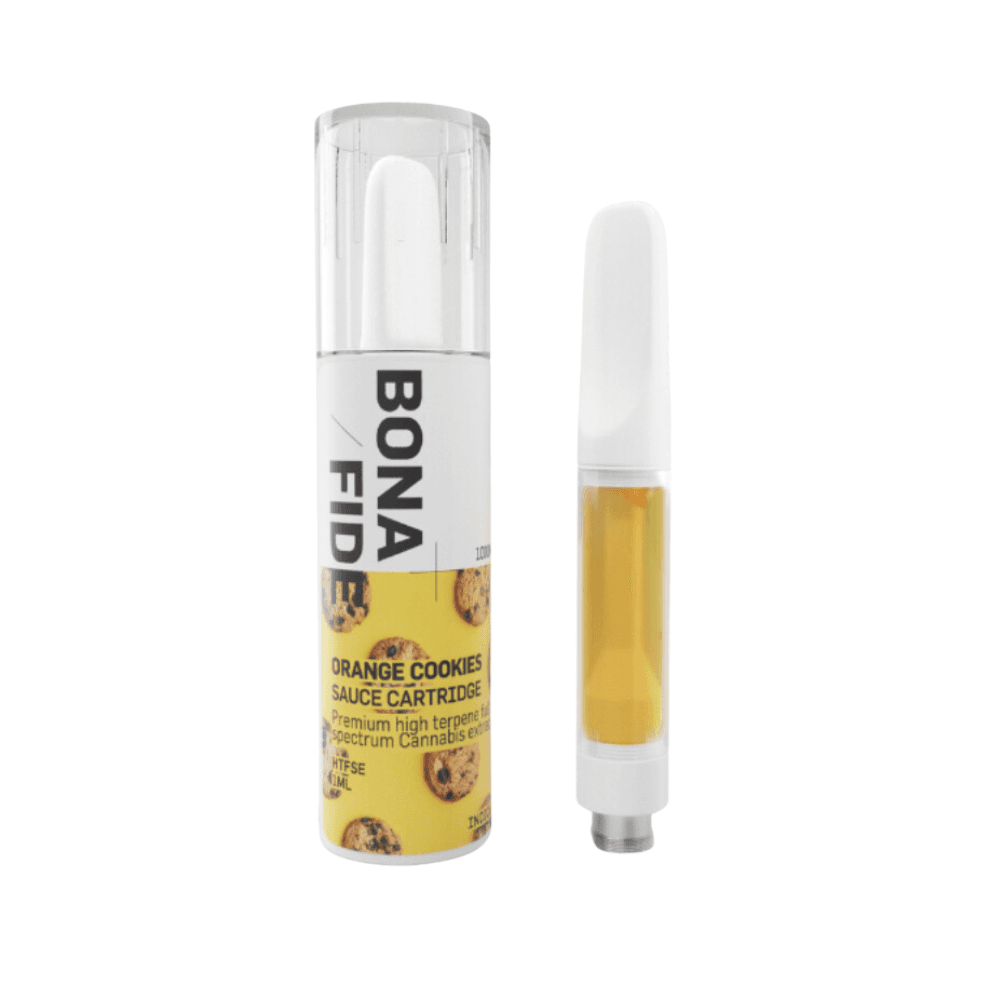
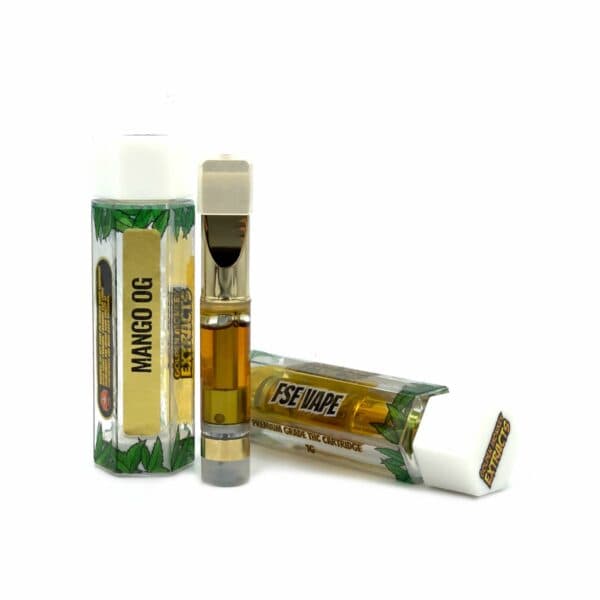

On this page
What 510 means
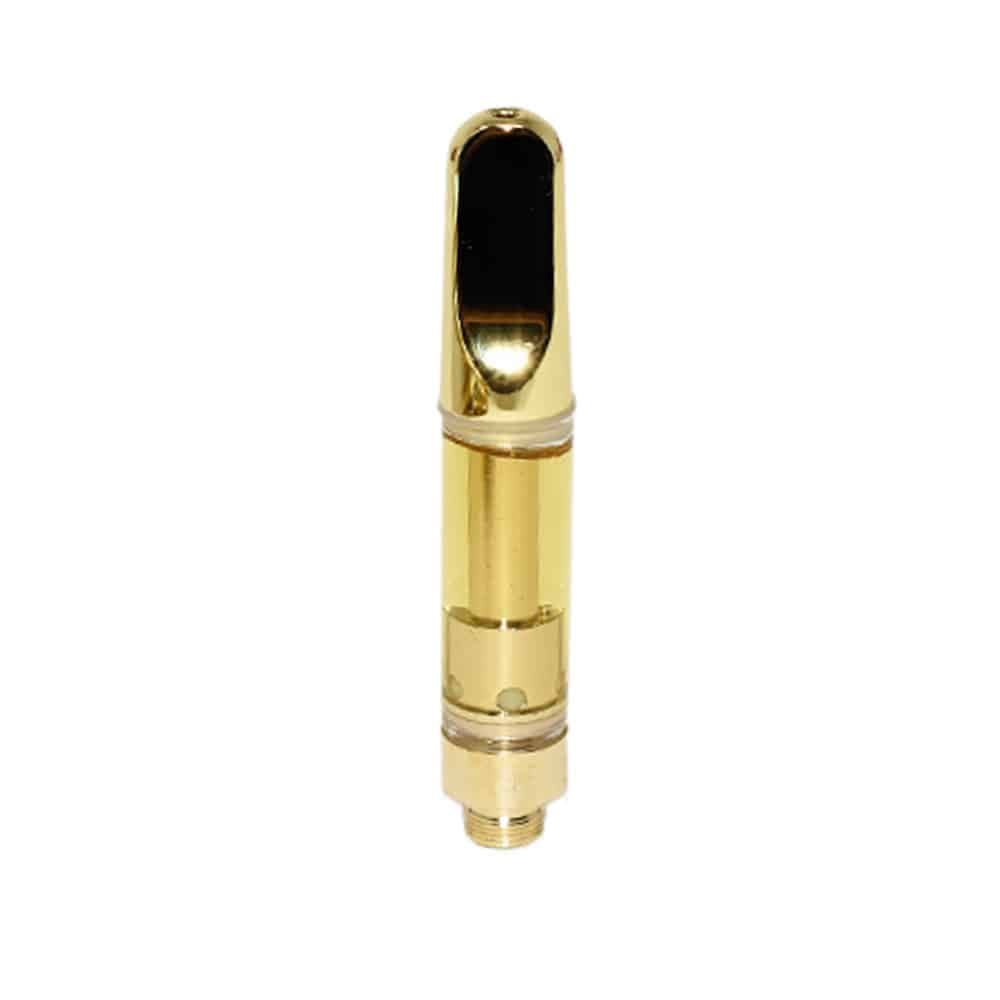
The Ontario Cannabis Store explains the name directly: it comes from the battery's five-millimetre length and the 10 threads, or grooves, that connect the battery and the cart. 510-thread carts are among the most popular for exactly that reason: they fit the widely available 510-thread battery.[1]
The battery is only the power source. Inside the cartridge is an atomizer, a heating element, and the battery heats it to turn the oil into vapour.[1]
Types of 510 battery
| Type | How it fires | Example on sale in Canada |
|---|---|---|
| Draw-activated | Inhale and it heats; no button | Jonny Chronic's draw-activated battery, with an LED that shows battery status[5] |
| Button with voltage settings | Press to heat; choose a power level | Good Supply's XL 510 battery: button-activated, with low, medium and high settings of 2.8V, 3.2V and 3.9V[4] |
| Button with more settings | As above, with more steps | Vessel's Compass: four settings, 2.4V, 2.8V, 3.2V and 3.6V, with LEDs for battery life and power[3] |
Draw-activated batteries are the simplest: nothing to press, nothing to set. Button batteries with voltage settings take a step more, but let you match the heat to the cart.
Voltage settings explained
Voltage sets how hard the battery drives the atomizer. Good Supply describes its three settings as a way to customise the battery to your preferred vaping experience.[4] There is no single right setting.
The cart's own oil plays a part too. The Ontario Cannabis Store notes that oil which is too thick can clog a cart, while oil that is too thin can leak, which is why producers sometimes add thinning agents such as propylene glycol or vegetable glycerin.[1] If the producer lists a recommended voltage for its cart, use that.
How to choose a 510 battery
- Check the thread. A 510 battery is made for 510-thread carts, so check the cart is a 510 before you buy a battery for it.[1]
- Draw or button. Draw-activated is simplest; a button battery with voltage settings gives you control.[3][5]
- Look for a safety certification. Health Canada suggests choosing vaping devices certified to a safety standard, such as ANSI/CAN/UL 8139, to reduce the risk of fire or explosion.[2]
- Buy from a trusted source. Health Canada advises buying batteries recommended by the manufacturer and from a trusted source.[2]
When a cart will not hit
The Ontario Cannabis Store's advice is short: vapes can malfunction, and if you are having trouble, refer to the FAQ or troubleshooting guide from the cart's producer.[1] Before you do, check the simple things: that the cart is a 510 cart, that it is screwed on, and that the battery is charged.
Battery safety
510 batteries are lithium-ion, and Health Canada warns that lithium-ion batteries and vaping devices can pose a hazard if they are not properly used, stored, carried, charged and disposed of. Its advice:[2]
- Don't modify your vaping device.
- Read the manufacturer's instructions for storing and recharging it, and don't exceed the recommended charging time.
- Keep spare batteries in a protective case, and don't carry them loose in a pocket: lithium-ion batteries can overheat, catch fire or even explode in contact with metal objects, and serious injuries have been reported.
- Don't use or charge a vaping device near oxygen sources, such as oxygen therapy equipment.
What Canadian rules say about carts
Vape carts are cannabis extracts under federal rules. A cannabis extract can hold no more than 1,000 mg of THC per immediate container, nicotine is not permitted in cannabis extracts, and extracts for inhalation may contain flavouring agents but not colouring agents, sugars or sweeteners.[6]
Health Canada also notes that an unregulated cutting agent, vitamin E acetate, was used in illegal THC vaping products, and says people shouldn't use vaping products from illegal or unregulated sources.[2]
What carts cost
Across the vape carts listed by the Canadian online dispensaries we track, the median price for a 1g cart is $30, and the cheapest is $20. Compare every brand and flavour on our vapes page, where each cart line lists every shop that sells it.
FAQ
What does 510 mean on a vape battery?
Do all carts fit a 510 battery?
What voltage should I use for a 510 cart?
What is the difference between draw-activated and button batteries?
Are 510 batteries safe?
How much THC is in a legal vape cart?
References
- Ontario Cannabis Store. How 510 thread vape cartridges are made. ocs.ca
- Health Canada. Vaping product safety. canada.ca
- Ontario Cannabis Store. Compass 510 Thread Vape Battery (Vessel), product listing. ocs.ca
- Ontario Cannabis Store. XL 510 Vape Battery (Good Supply), product listing. ocs.ca
- Ontario Cannabis Store. Jonny Chronic 510 Vape Battery, product listing. ocs.ca
- Health Canada. Guide on composition requirements for cannabis products. canada.ca
Cart prices are computed from Weedpedia's price feed: 1g vape carts listed by the Canadian online dispensaries we track in October 2026.
For adults 19+. General information, not medical advice. Follow the manufacturer's instructions for any battery or device.