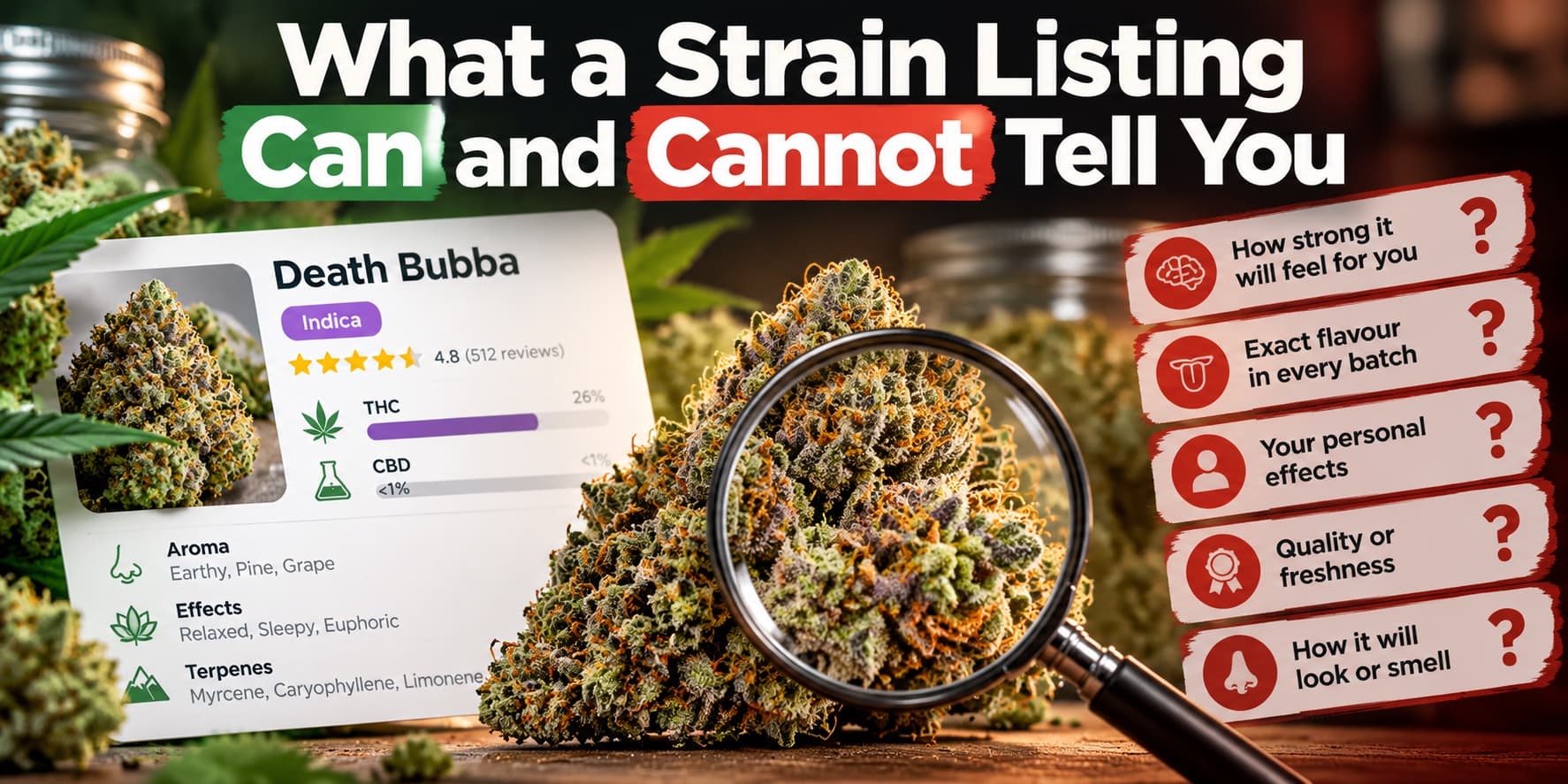
The effect tags on a strain page are, on most cannabis databases, generated from whether the strain is filed as indica or sativa, not measured from the plant. That is worth knowing before you choose a product on the strength of them, and it applies to our listings as much as anyone else's.
Key Takeaways
- Lab-tested cannabinoid figures are the only part of a listing measured from the product.
- Effect and terpene tags are usually derived from the category label rather than from testing.
- The category tells you little about strength: 2.1 points separates the averages.
- A batch COA beats every other source, because it describes the jar rather than the cultivar.
- Strain names are not standardised, so the same name from two growers can be two different plants.
On this page
What a listing can and cannot evidence
None of this means strain pages are useless. It means the two halves carry very different weight, and they are presented identically: same typeface, same confident tone, same little tag pills. A lab-tested 22% THC and a "creative" tag look equally factual on screen and are not.
Where the information comes from
The gap between the top and bottom rungs is large. A certificate of analysis describes the specific batch in front of you. Category inference describes a convention about how a word is usually applied. Both end up rendered as a confident line on a product page.
A reasonable test: if a listing states a terpene profile but links no assay, it is describing the cultivar's reputation rather than the jar's contents.
What indica and sativa are worth
The labels have real history, they began as a botanical distinction about plant morphology, but they have been applied so loosely for so long that their predictive value for effect is weak. As a potency signal they are close to worthless.
What the categories do carry is a convention about reported character: indica-labelled products are generally described as more physically sedating, sativa-labelled as more stimulating. That convention is not nothing, and plenty of people find it a useful shorthand. It is just not a measurement, and the industry's habit of generating effect tags from it turns a loose convention into what looks like data.
How to read a listing anyway
Three habits make strain pages more useful without pretending they are more rigorous than they are.
Treat cannabinoid figures as a band, not a number. Potency varies between harvests of the same genetics and between parts of the same plant. A listed 22% means roughly that, for the batch tested.
Read effect tags as genre, not prescription. They tell you which shelf a product sits on and how it is conventionally described. They do not predict your experience, and they were probably not measured.
Weigh what is checkable. Price per gram, who stocks it, what the store's shipping threshold is. These are verifiable, and between two similar products they are a firmer basis for choosing than a tag.
FAQ
Are strain effect tags accurate?
Does indica always mean sleepy?
What is a COA and why does it matter?
Can I trust a terpene profile on a strain page?
Why do two sites list different THC for the same strain?
Potency figures are computed from Weedpedia's published strain database (3,536 strains with a listed THC value) at the time of writing. Related reading: how strong Canadian weed actually is, what Canadian weed grades mean, and the strain glossary.
For adults 19+. General information about how product listings are compiled, not medical advice or a claim about any specific product.