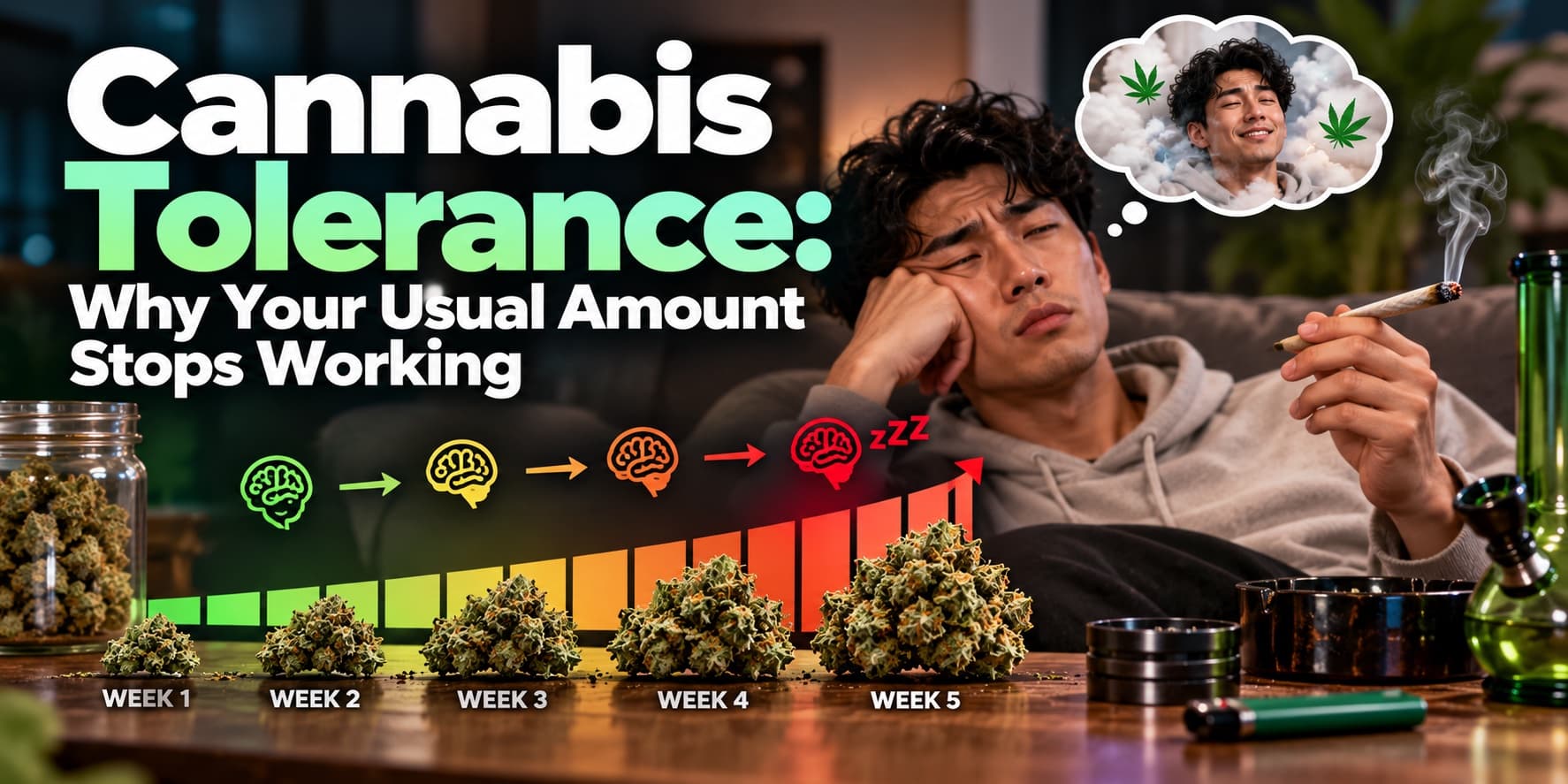
Tolerance responds to how much THC you take and how often, not to which strain it came from. That is why switching from indica to sativa, or hunting for something weaker, so rarely restores the effect people are chasing. Across 3,536 published strains the gap between the strongest and weakest category average is 2.1 percentage points, which is not a dose change.
Key Takeaways
- Tolerance tracks total intake and frequency, not product type.
- Switching category changes almost nothing: 2.1 points separates the category averages.
- The first few days of a break are the hardest; disrupted sleep and appetite are commonly reported.
- Most of the benefit of a break arrives in the first two weeks.
- Restarting at your old amount undoes it, which is the step most people skip planning for.
On this page
What tolerance actually is
With regular use the body becomes less responsive to THC, so the amount that once produced a given effect produces less of it. This is a well-documented pharmacological response, and importantly it is reversible: sensitivity returns when intake stops.
Two caveats worth carrying. The timings above are a commonly reported pattern, not a schedule: how fast tolerance builds and how fast it fades varies a great deal between people and with how much is being consumed. And this is about the effects you notice, which is not the same thing as any clinical measure.
Why switching strains does not work
The instinctive response to fading effects is to change product. It is the wrong lever, and our own catalogue shows why.
Category averages sit within 2.1 percentage points of each other, and the variation inside any one category is wider than the gap between them. A switch from indica to sativa is a change in reported character, not in the amount of THC you take.
If the same quantity of a different strain stops working too, that is the answer rather than a reason to keep switching. Tolerance followed you across the change because it was never about the strain.
Taking a break
The right-hand column is worth dwelling on, because every item in it is a product substitution. Each one feels like doing something, and none of them reduces intake. Edibles in particular tend to go the other way: the delayed onset makes it easy to take substantially more THC than intended.
The restart nobody plans
The part that undoes a break is the first session after it. Sensitivity has returned, which is the entire point, and the amount that felt routine a fortnight ago now lands considerably harder.
Deciding the restart amount before the break ends, rather than in the moment, is the single most useful thing to do with a tolerance break. Otherwise the break resets your tolerance and the restart immediately spends the gain.
FAQ
How long does a tolerance break need to be?
Will switching from indica to sativa lower my tolerance?
Does a higher-THC strain overcome tolerance?
What happens in the first few days of a break?
Are edibles a way to take a break from smoking?
Potency figures are computed from Weedpedia's published strain database (3,536 strains with a listed THC value) at the time of writing. Tolerance timings describe commonly reported experience and are not a clinical schedule. Related reading: how strong Canadian weed actually is and mixing cannabis and alcohol.
For adults 19+. This article is general information, not medical advice. Cannabis affects people differently. If you are concerned about your use, are pregnant or breastfeeding, take prescription medication, or have a history of psychosis or a heart condition, speak to a healthcare professional.